




Rodentia
Comprised of works hand-picked by members of the Vidéographe team, video of the month explores Vidéographe's vast collection and offers insight into the team behind the centre. New month, new video.
Sarah Foulkes is a filmmaker and cultural worker. She is most interested in exploring labour, feminism(s) and narrativity through image and sound.
Synopsis
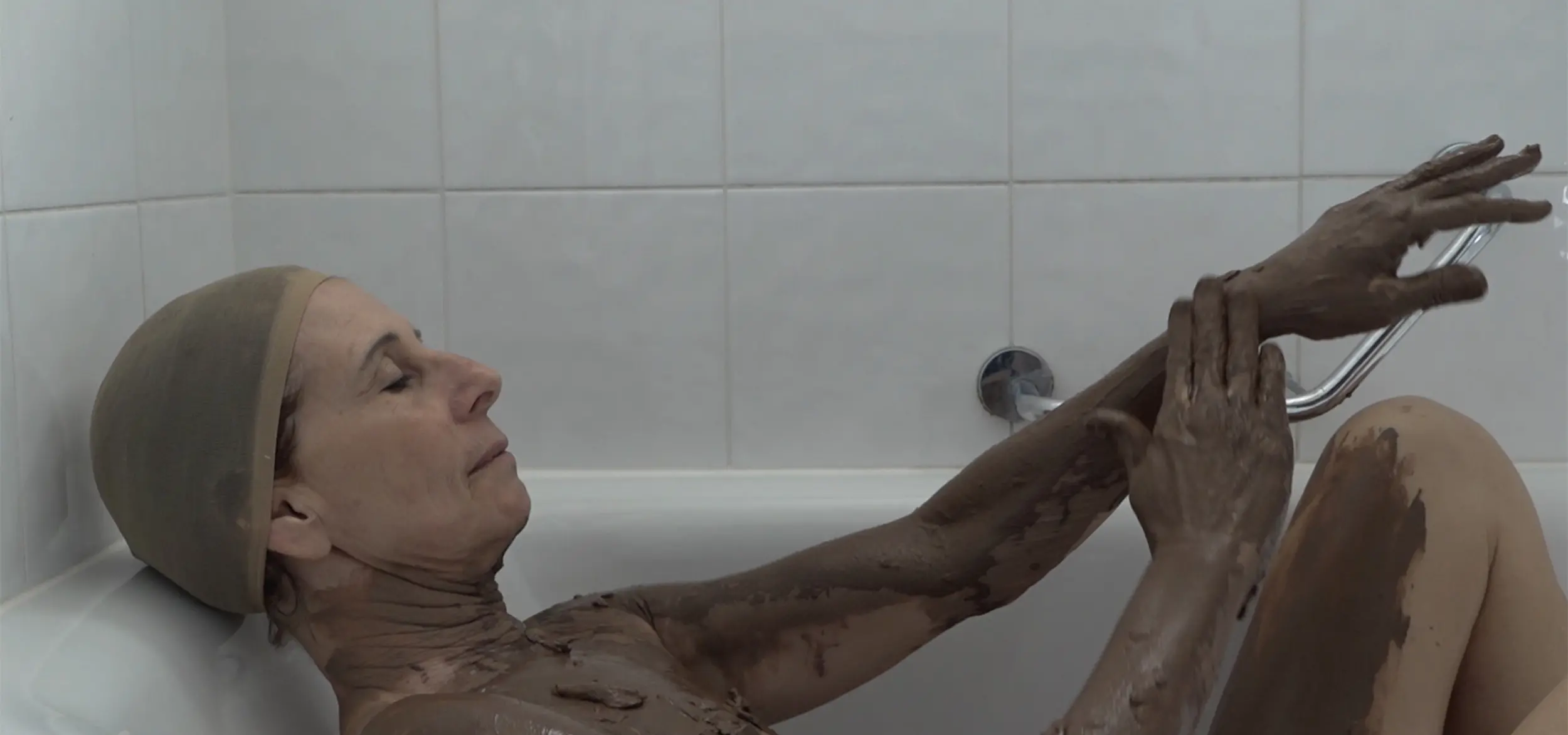
My aunt is 60 years old. She is about to undergo a series of injections of cells taken from a heterocephalus -- an animal of great longevity that is immune to all cancers. Speaking to the camera, she describes a very peculiar ritual intended to preserve her body, and potentially induce a change.
Rodentia examines the fears and fantasies of the timeworn female body steered by the beauty industry and scientific promises.
A word from the team
In 2020, when Rodentia was made, bio-hacking was nothing new. If pushing the boundaries of human engineering translates to an extra decade or two of health - why not try it? The ironic trap, of course, within the ever-present drive to stave off aging and, eventually, death is when it inhibits life and good living. In her short documentary, Elisa Gleize's films her 60-year old aunt as she undergoes a series of injections of cells taken from the naked mole-rat - the longest-living rodent. In her candid interviews, Danièle Bove speaks about her fear of visible aging and of her growing dislike of her 'flabby body.' She assuages these fears by turning to stem cell therapy - for which pays 82 000 Swiss francs (roughly $117 000 CAD) for a year-long treatment. She complements these treatments with LED therapy and regular 'earthing' - a pseudo-scientific process in which cells are, apparently, regenerated through direct contact with the soil. If Danièle was just spending her disposable income on treatments that neither helped nor hindered, it might not be so bad. Live and let live and so on and so forth.
But her aunt starts forgetting things. Including her appointments for the injections. On the other hand, since starting the injections she's stopped isolating herself, in the dark, all day - much like a mole-rat might. Gleize is careful to not make a hit-piece on her aunt and her misguided practices. Instead, she seems genuinely curious to understand her and track their evolving relationship. With its cold, sleek interiors and still camera, Rodentia's aesthetic and thematic preoccupations are reminiscent of Todd Hayne's Safe - a '90s masterpiece about a suburban woman who seeks out alternative treatment to treat her mysterious environmental illness. Similarly to Safe, Rodentia evokes the ways in which women resort to taking their health back into their own hands - by any means necessary.
Sarah Foulkes
Collection and Sales Coordinator


